



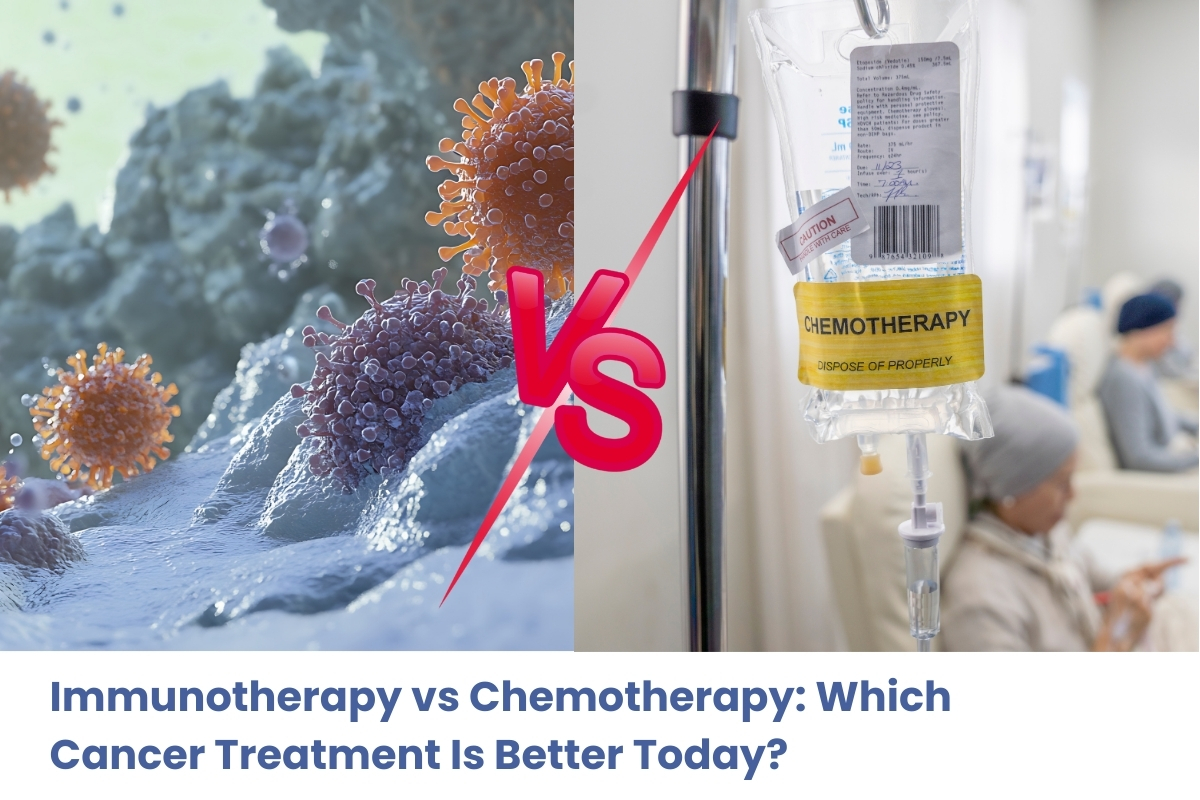
Cancer treatment has changed a lot over the years. For a long time, chemotherapy was the main option for almost every type of cancer. But today, immunotherapy has become one of the most talked-about and hopeful treatments. Many people wonder Which one is better? The truth is, both have strengths and limitations. The best treatment depends on the type of cancer, how early it is found, and how a person’s body responds.
What Is Chemotherapy?
Chemotherapy often called “chemo” uses strong medicines to kill cancer cells. These medicines travel through the bloodstream and attack cells that are dividing fast.
How it works
Cancer grows quickly, and chemo drugs target these fast-growing cells. But the problem is that healthy cells like hair follicles, the stomach lining, and bone marrow also grow fast. This is why chemo causes side effects like hair loss, vomiting, tiredness, and low immunity.
Where it works best
Chemotherapy is very helpful when:
-
Cancer has spread to different parts of the body
-
The doctor wants to shrink the tumor before surgery
-
The patient needs treatment along with radiation
-
The cancer type responds strongly to chemo (like some blood cancers)
Even with side effects, chemo has saved many lives for decades and still plays a very important role today.
What Is Immunotherapy?
Immunotherapy is a newer treatment that works in a completely different way. Instead of directly killing cancer cells, it helps your immune system fight cancer.
Your immune system normally protects you from infections. Cancer, however, is tricky. It hides, changes its appearance, and sometimes even “turns off” your immune response. Immunotherapy tries to switch the immune system back on so it can see the cancer and attack it.
Types of immunotherapy
There are different types, including:
-
Immune checkpoint inhibitors (help immune cells recognize cancer again)
-
CAR T-cell therapy (your immune cells are modified and returned to your body)
-
Cancer vaccines
-
Monoclonal antibodies
Each type works differently, but they all focus on strengthening the body’s natural defense system.
Where it works best
Immunotherapy has shown great results in cancers like:
-
Melanoma (skin cancer)
-
Lung cancer
-
Kidney cancer
-
Some types of lymphoma
-
Head and neck cancers
In some cases, people who were given months to live have seen long-term survival because their body responded well to immunotherapy.
Which Works Better?
There is no simple answer because every cancer type is different.
When chemotherapy might work better
-
When cancer grows very quickly
-
When the tumor needs to shrink fast
-
When the cancer is chemo-sensitive (like leukemia)
-
When immunotherapy failed or is not suitable
Chemo also acts fast, which is important in emergency situations.
When immunotherapy might work better
-
When the cancer has specific markers (like PD-L1 positive)
-
When cancer does not respond well to chemo
-
When long-term control is needed
-
When the patient cannot tolerate chemo side effects
Some patients who respond well to immunotherapy stay cancer-free for years, even after stopping treatment. This long-lasting effect is one of the biggest advantages of immunotherapy.
Cost Comparison
Chemotherapy
Chemo has been around for many years and is generally less expensive. Many drugs are available in generic form, reducing cost.
Immunotherapy
Immunotherapy is much more expensive, especially newer options like CAR T- cell therapy. This is one reason why it is not available to everyone.
Can Both Be Used Together?
Yes! In many cases, immunotherapy and chemotherapy are used together. This can:
-
Boost the immune system’s ability to fight cancer
-
Shrink tumors faster
-
Increase treatment success
Many modern cancer treatment plans use a combination for the best possible result.
Which Treatment Is Better?
The honest answer: Neither is better for every patient.
-
Chemotherapy is fast-acting and effective for many cancers.
-
Immunotherapy can give long-term control and fewer side effects but works only for some people.
The best treatment depends on:
-
Type of cancer
-
Stage of cancer
-
Biomarkers and genetic tests
-
Patient’s age and health
-
How the body reacts to treatment
Often, the most effective approach is a combination of both.
Conclusion
Cancer treatment has come a long way. Thanks to advances like immunotherapy and smarter use of chemotherapy, many people today live longer and healthier lives even after a cancer diagnosis. Instead of asking “Which treatment is better?”, it is more helpful to ask:
Which treatment is better for my cancer and my body?
Doctors now personalize cancer treatment based on each patient’s unique situation. With more research, newer drugs, and better understanding of the immune system, the future of cancer treatment looks more hopeful than ever.
Read Also:
Why Annual Health Checkups Are Important for Cancer Prevention?

What lifestyle changes can reduce the risk of cancer?

Why Early Detection is Important?
