



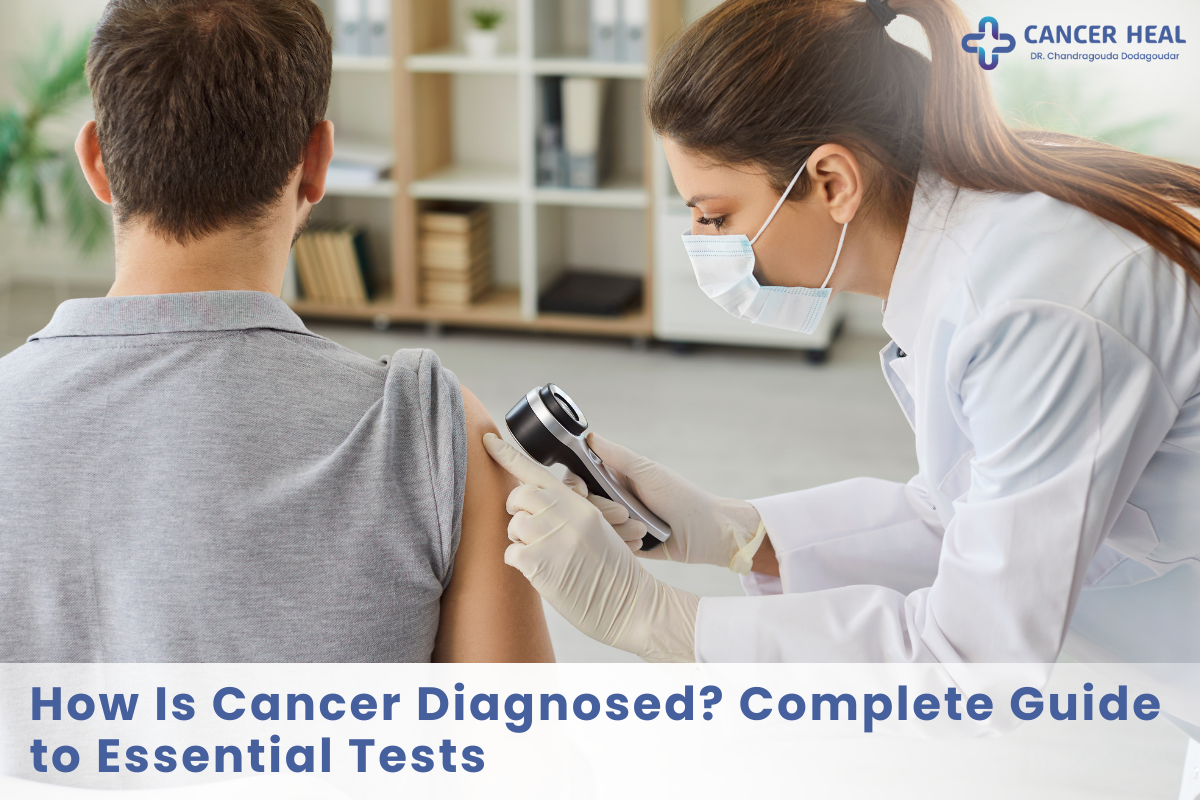
Receiving clear health answers is critical when dealing with persistent fatigue, unexpected weight loss, or abnormal physical changes. Understanding how is cancer diagnosed gives patients and families the knowledge needed to navigate complex clinical evaluations with confidence. With rising Cancer Cases in India, early medical evaluation has become a vital priority for families across the nation. Understanding the underlying Cancer Incidence in India helps patients recognize why timely testing matters before a condition progresses. In this guide, you will learn how doctors test for cancer, the primary diagnostic tests for cancer patients, and how modern medical technology identifies abnormal cellular changes.
Understanding How Is Cancer Diagnosed
Cancer diagnosis is a comprehensive medical process that identifies malignant cells, determines their point of origin, and assesses their potential spread throughout the body. By combining advanced laboratory evaluations, high-resolution tissue scanning, and specialized tissue extractions, medical teams transform vague physical symptoms into precise clinical diagnoses.
A complete diagnostic evaluation moves from general physical check-ups to highly specific molecular investigations. Doctors rely on structured cancer detection methods to differentiate benign conditions from malignant growths. Today, specialized diagnostic tools—such as blood collection tube kits, rapid antigen test cassettes, and liquid biopsy panels—allow laboratories to process patient samples with exceptional speed and accuracy.
Key Diagnostic Tools and Products:
-
Tumor Marker Blood Test Kits: Immunoassay diagnostic kits designed to detect elevated protein markers like PSA, CA-125, and CEA in patient serum.
-
Biopsy Collection Kits and Needles: Sterile core-needle and fine-needle aspiration kits used to retrieve intact tissue samples safely for histological analysis.
-
Liquid Biopsy Testing Kits: Advanced genetic sequencing panels that detect circulating tumor DNA (ctDNA) directly from simple blood draws.
-
Stool Occult Blood Test Kits: At-home fecal immunochemical test (FIT) cassettes used for preliminary colorectal risk screening.
-
Diagnostic Imaging Contrast Media: Specialized intravenous agents used in contrast-enhanced CT and MRI scans to highlight abnormal vascular structures.
Why Is Accurate Cancer Diagnosis Important?
Analyzing Cancer Facts in India reveals that late-stage diagnoses contribute heavily to an increasing Cancer Death Rate in India. The Most Common Cancers in India—such as breast, cervical, oral, and lung cancers—often develop silently. Receiving an accurate, timely evaluation provides significant advantages:
-
Patient Value: An early and precise diagnosis enables localized treatments, preserving healthy organ function and improving five-year survival metrics.
-
Clinical Efficiency: Clear diagnostic data prevents trial-and-error treatments, allowing oncologists to tailor targeted therapies immediately.
-
Economic Impact: Identifying malignancies early avoids prolonged ICU admissions, complex late-stage chemotherapies, and exorbitant emergency care expenses.
-
Industry Relevance: Modern oncology relies heavily on standardized cancer diagnosis tests to deliver personalized, precision-driven patient care.
How Doctors Test for Cancer Step-by-Step
Primary Diagnostic Steps: How Is Cancer Diagnosed in Clinical Settings
Step 1: Clinical History and Laboratory Blood Profiling
The diagnostic journey begins with a comprehensive physical examination and complete blood panel analysis. Doctors order CBC collection kits and biochemical marker assays to check for cellular imbalances, anemia, or abnormal enzyme levels.
Step 2: Non-Invasive Diagnostic Imaging
If blood work or physical symptoms suggest abnormalities, physicians utilize biopsy and imaging for cancer evaluation. Ultrasound scanners, digital mammography systems, and CT imaging equipment create detailed cross-sectional views of internal organs to pinpoint tissue density shifts or structural tumors.
Step 3: Tissue Biopsy and Pathological Verification
A microscopic evaluation of suspicious tissue remains the ultimate gold standard for diagnosis. Using sterile biopsy punch instruments or guided core needles, specialists collect cellular specimens and analyze them under digital pathology microscopes to confirm whether cells are malignant or benign.
Benefits of Modern Cancer Detection Methods
-
High Sensitivity and Specificity
-
What it is: The ability of advanced diagnostic tests to accurately detect small cellular changes without generating false positives.
-
Why it matters: Prevents unnecessary patient anxiety while ensuring true early-stage malignancies are never overlooked.
-
Expected outcome: Reliable, actionable clinical reports that guide decisive medical intervention.
-
-
Precision Staging and Biomarker Profiling
-
What it is: Identifying the exact stage (Stage I through IV) and genetic markers of a tumor.
-
Why it matters: Enables medical teams to prescribe targeted biological therapies and immunotherapy rather than broad-spectrum treatments.
-
Expected outcome: Higher treatment success rates with reduced physical side effects for patients.
-
-
Minimally Invasive Sampling Options
-
What it is: Using liquid biopsy kits and endoscopic biopsies instead of open surgical exploration.
-
Why it matters: Minimizes physical recovery times, lowers infection risks, and improves patient comfort during diagnostic workflows.
-
Expected outcome: Faster turnaround times for test results with negligible recovery periods.
-
Diagnostic Challenges and Common Mistakes
-
Challenge 1: Misinterpreting Non-Specific Symptoms
-
Problem: Dismissing persistent fatigue, mild indigestion, or subtle coughs as minor everyday ailments.
-
Cause: Early-stage malignancies frequently mimic routine viral infections or benign digestive disorders.
-
Solution: Schedule comprehensive health check-ups if non-specific symptoms persist beyond two to three weeks.
-
-
Challenge 2: Relying Solely on Blood Marker Tests
-
Problem: Assuming normal blood work guarantees the total absence of cancerous growths.
-
Cause: Some early-stage tumors do not shed detectable protein markers into the bloodstream.
-
Solution: Combine laboratory blood assays with imaging scans and physical examinations as recommended by physicians.
-
-
Challenge 3: Delaying Tissue Biopsies Out of Fear
-
Problem: Postponing recommended tissue collection due to fear of pain or misconception that biopsies cause cancer to spread.
-
Cause: Widespread misinformation regarding invasive sampling procedures.
-
Solution: Educate patients that modern biopsy collection kits utilize localized anesthesia and guarded needles that prevent tumor cell seeding.
-
Best Practices and Expert Tips for Cancer Testing
-
Request a complete diagnostic roadmap from your physician when investigating unexplained physical changes.
-
Combine blood marker panels with structural imaging scans for comprehensive baseline screening.
-
Ensure tissue biopsy samples are sent to accredited pathology laboratories with digital immunohistochemistry capabilities.
-
Maintain an organized digital file of all diagnostic test results, imaging DICOM files, and pathology reports.
-
Discuss liquid biopsy testing options with your oncologist if traditional tissue biopsy is clinically challenging.
-
Seek a second opinion from a specialized pathologist if biopsy results remain inconclusive or ambiguous.
-
Utilize reliable home FIT stool test kits for routine preliminary colorectal health monitoring.
-
Follow pre-test guidelines strictly, such as fasting before blood draws or clearing the bowel before imaging, to ensure test accuracy.
-
Ask your medical team about genetic biomarker testing to evaluate inherited cancer risks within your family.
Comparison Table: Primary Diagnostic Tests for Cancer Patients
| Test Category | Primary Methods Used | Key Equipment / Products | Best Used For |
| Laboratory Blood Tests | CBC, Tumor Marker Assays, Liquid Biopsy | Immunoassay kits, Blood collection tubes, ctDNA sequencing panels | Detecting systemic chemical shifts and circulating protein markers |
| Diagnostic Imaging | Ultrasound, Mammography, CT, PET-CT, MRI | Contrast media, Digital X-ray plates, PET scanners | Locating physical tumor size, shape, structural density, and metabolic activity |
| Tissue Biopsy | Core needle, Fine Needle Aspiration (FNA), Surgical | Sterile biopsy needles, Histology fixatives, Digital microscopes | Providing definitive microscopic proof of cell malignancy and tumor grade |
Frequently Asked Questions (FAQ)
What is the most definitive way how doctors test for cancer?
A tissue biopsy is the single most definitive method doctors use to confirm a cancer diagnosis. Pathologists examine harvested tissue samples under high-powered digital microscopes to identify structural cell abnormalities and verify malignancy with near-100% precision.
Can routine blood work reveal how cancer is diagnosed?
Routine blood work helps raise medical suspicion by detecting abnormal white cell counts or elevated organ enzymes, but it cannot diagnose cancer alone. Specialized tumor marker immunoassay kits measure specific proteins shed by tumors to help guide further diagnostic testing.
Is a biopsy safe for cancer diagnosis tests?
Yes, tissue biopsies performed using modern sterile needle collection kits are safe, routine procedures. Guided imaging techniques ensure precise needle placement, and local anesthesia minimizes discomfort while eliminating the risk of spreading malignant cells.
How do imaging scans help in diagnostic tests for cancer patients?
Imaging modalities like CT, MRI, and PET scans allow doctors to visualize internal anatomy without incision. They pinpoint exact tumor locations, measure tumor dimensions, and reveal whether malignant cells have spread to adjacent tissues or distant organs.
What role does liquid biopsy play in modern cancer detection methods?
Liquid biopsy panels analyze blood samples for circulating tumor DNA (ctDNA) shed by cancerous cells. This non-invasive method allows doctors to detect genetic mutations and monitor treatment response without requiring surgical tissue extraction.
How long does it take to get complete cancer diagnosis results?
Blood test and basic imaging results are often available within 24 to 48 hours. Comprehensive pathology and immunohistochemistry reports from tissue biopsies typically take 3 to 7 days, as specialized tissue staining and digital analysis are required.
What are the most common cancers in India diagnosed through routine screening?
Breast, cervical, and oral cancers represent the majority of diagnoses identified through routine screening in India. Mammograms, Pap smear kits, and visual oral cavity exams catch these malignancies at early, highly treatable stages.
What should patients do if cancer diagnosis tests return positive?
If diagnostic tests confirm malignancy, consult a multidisciplinary oncology team immediately. Obtain full pathology reports, request staging imaging scans, and explore personalized treatment plans including surgery, radiation, or targeted therapy.
Key Takeaways
-
Understanding how is cancer diagnosed relies on a multi-step approach combining blood assays, imaging scans, and tissue biopsies.
-
Biopsy evaluations remain the non-negotiable gold standard for confirming malignant cellular structures.
-
Advanced diagnostic products like liquid biopsy kits and digital pathology systems speed up detection and treatment planning.
-
Timely evaluation directly addresses high mortality statistics by enabling early, localized therapeutic interventions.
-
Patients should actively collaborate with oncologists to select the appropriate combination of diagnostic evaluations.
Final Verdict
Navigating diagnostic evaluations can feel overwhelming, but modern medical advancements have rendered testing faster, safer, and more accurate than ever before. Utilizing a combination of structural imaging, molecular blood panels, and precise biopsy collection tools ensures that patients receive clear answers quickly, laying the groundwork for effective, timely treatment.
Conclusion
Knowing how is cancer diagnosed empowers patients to take swift, proactive steps toward protecting their health. By combining advanced laboratory assays, non-invasive imaging, and pathological verification, doctors can pinpoint cellular abnormalities long before severe complications arise. If you or a loved one are experiencing unexplained symptoms or require routine health evaluations, consult a medical specialist today to discuss the appropriate diagnostic roadmap.
