



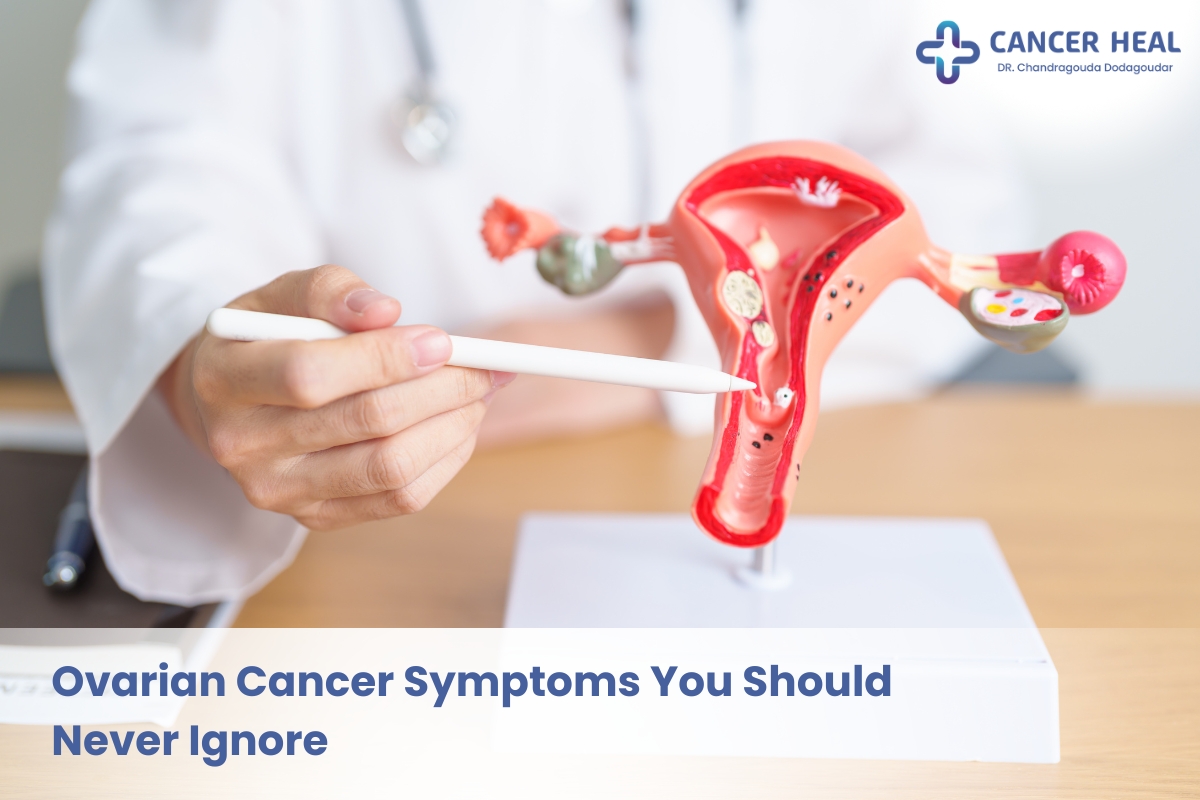
Ovarian cancer is often described as a silent disease, but doctors say that’s not entirely accurate.
“It’s not really silent — the symptoms are just subtle, “Changes are happening in the body, but they can easily be mistaken for everyday issues.”
And that’s the real challenge.
Many of the early symptoms of ovarian cancer are things women commonly experience at different times in their lives — bloating, fatigue, appetite changes, or irregular periods. They’re also symptoms linked to many other conditions. Since there’s no routine screening test (unlike mammograms for breast cancer or Pap tests for cervical cancer), spotting ovarian cancer early depends heavily on knowing your body and noticing unusual changes.
Only about 19% of ovarian cancer cases are diagnosed at an early stage, which shows how important awareness truly is.
Understanding the Early Symptoms: What Your Body May Be Trying to Tell You
Most early signs of ovarian cancer are vague, but not insignificant. They tend to appear gradually, becoming more frequent or persistent over time.
Here are the symptoms every woman should pay close attention to:
1. Abdominal bloating or increasing abdominal size
Not the occasional bloating after a big meal—this is a bloating that sticks around, becomes more noticeable, and doesn’t seem to have a clear reason.
2. Changes in appetite
You may feel full quickly even when eating small meals, or you may lose interest in food altogether without trying to.
3. Menstrual irregularities
Periods may come late, early, heavier, or lighter. These changes should be especially noted if they are unusual for your body.
4. Pelvic or abdominal discomfort
This might feel like a dull ache, pressure, or cramping that persists over time.
5. Frequent urination
Feeling the need to urinate more often can result from pressure on the bladder.
6. Extreme fatigue or low energy levels
Not just tiredness from a busy week—this is a tiredness that makes even simple tasks feel draining.
7. Unintentional weight loss
Losing weight without changing your diet or exercise habit deserves immediate attention.
8. Gastrointestinal issues
Constipation, indigestion, nausea, vomiting, or changes in bowel habits are all possible symptoms.
9. Swelling in the legs
This is less common but should never be ignored.
None of these symptoms alone confirm ovarian cancer. But when they appear for more than 12 days in a month or continue for two weeks or longer, doctors strongly recommend a medical consultation.
This consistency is what differentiates normal fluctuations from something deeper.
Read More: What Is the Treatment for Cervical Cancer?
Why Staying Alert Can Make a Life-Changing Difference
Gynecologic cancers often mimic other conditions. Bloating may look like gas, fatigue may seem like stress, and pelvic discomfort may be attributed to hormonal changes. This overlap is what makes ovarian cancer tricky.
Only two gynecologic cancers—breast cancer and cervical cancer—have regular screening tests. Ovarian cancer does not.
So early diagnosis relies heavily on:
-
Awareness
-
Self-observation
-
Timely medical consultation
Early detection not only increases survival rates but often leads to more treatment options, fewer complications, and better outcomes.
Who Is More Likely to Develop Ovarian Cancer?
Ovarian cancer can affect any woman, but some risk factors increase the chances:
Age above 50
Most ovarian cancer cases occur after menopause.
Family history of ovarian or breast cancer
A close relative (mother, sister, aunt) with these cancers raises your risk significantly.
BRCA1 or BRCA2 gene mutations
These inherited gene mutations increase the risk of both breast and ovarian cancer.
Never having been pregnant
Women who have not carried a pregnancy to term may have a slightly higher risk.
Endometriosis
This condition can increase ovarian cancer risk in some women.
Long-term hormone replacement therapy
Especially estrogen-only therapy.
If you fall into any high-risk category, it’s wise to talk to your doctor about:
-
Genetic counseling
-
Preventive measures
-
Periodic ultrasounds
-
Potential blood tests
-
Monitoring symptoms closely
Knowledge and proactive care can reduce risk and allow early detection.
Conclusion
Ovarian cancer may be subtle, but it is not silent. Your body often sends signals — the key is noticing them and acting early.
If something feels off, trust your instincts and talk to your doctor. Early detection can truly change the outcome.
