
Subscribe to out newsletter today to receive latest news administrate cost effective for tactical data.
Let’s Stay In Touch



- Phone:+91 79824 91995
- Email:info@cancerheal.co.in
Subscribe to out newsletter today to receive latest news administrate cost effective for tactical data.
2478 Street City Ohio 90255
Subscribe for newsletter
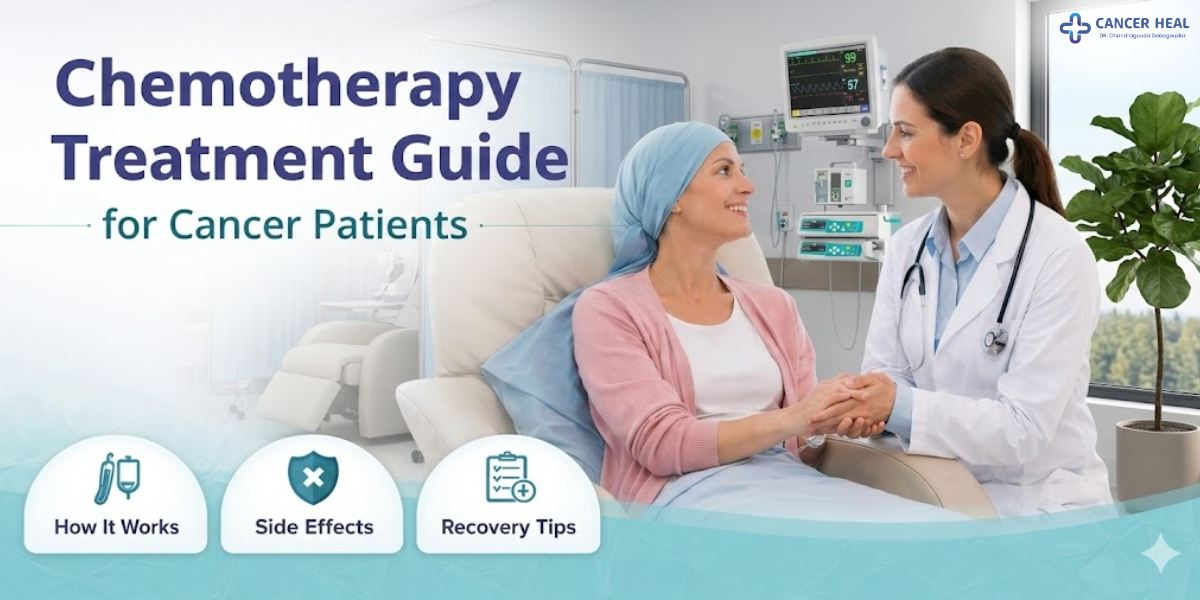
Chemotherapy is one of the most common and effective treatments used to fight cancer. It uses powerful medications to destroy cancer cells, slow their growth, or stop them from spreading to other parts of the body. For many patients and caregivers, hearing the word chemotherapy can feel overwhelming. However, understanding how it works, what to expect, and how to manage side effects can make the journey much easier.
Modern chemotherapy treatments are safer, more targeted, and better managed than ever before. Doctors carefully design chemotherapy plans based on the type of cancer, stage of disease, and overall health of the patient.
This guide explains everything you need to know about chemotherapy including how it works, when it is used, possible side effects, and how patients can prepare for treatment. Our goal is to help patients and caregivers feel informed, confident, and supported throughout the cancer treatment process.
Chemotherapy is a type of cancer treatment that uses drugs to destroy cancer cells. These medicines circulate throughout the body and target rapidly dividing cells, which include cancer cells.
Chemotherapy may be used:
To kill cancer cells
To shrink tumors before surgery or radiation
To destroy remaining cancer cells after treatment
To slow cancer growth
To reduce cancer symptoms in advanced stages
Chemotherapy can be given alone or combined with other treatments such as surgery, radiation therapy, targeted therapy, or immunotherapy.
Cancer cells grow and divide faster than most normal cells. Chemotherapy drugs work by attacking these rapidly dividing cells.
However, some healthy cells also divide quickly, including:
Hair follicles
Bone marrow cells
Cells lining the digestive tract
Because of this, chemotherapy can cause side effects such as hair loss, fatigue, and nausea. Fortunately, many side effects are temporary and can be managed with modern supportive care.
Chemotherapy can be delivered in different ways depending on the cancer type and treatment plan.
The most common method where chemotherapy drugs are delivered directly into a vein through an IV line or port.
Some chemotherapy drugs come as pills or capsules that patients can take at home under medical supervision.
Drugs may be injected into:
Muscle (intramuscular)
Skin (subcutaneous)
Spinal fluid (intrathecal)
In certain cases, chemotherapy may be delivered directly to a specific area of the body, such as the abdomen or liver.
Each patient receives a personalized chemotherapy plan.
Treatment day: Chemotherapy drugs are administered.
Rest period: The body recovers from treatment.
Repeat cycles: Treatment continues for several weeks or months.
A full chemotherapy course may last 3–6 months or longer, depending on the cancer type.
Before each session, doctors usually check:
Blood counts
Liver function
Kidney function
Overall health status
This ensures that treatment remains safe and effective.
EXCELLENTTrustindex verifies that the original source of the review is Google. Very professional and experienced oncology specialist in Delhi. Thank you for the great treatment and support.Posted onTrustindex verifies that the original source of the review is Google. If anyone is searching for a trusted cancer specialist doctor in Delhi, I highly recommend Dr. Chandragouda Dodagoudar. He has vast experience and treats patients with great care and compassion. One of the most professional doctors we have met.Posted onTrustindex verifies that the original source of the review is Google. Dr. Chandragouda Dodagoudar is truly one of the best cancer specialists in Delhi. His experience and approach toward treatment gave us confidence during a very difficult time. He explained every step of the treatment clearly and provided the best guidance. Highly recommended if you are looking for a medical oncologist in Delhi.Posted onTrustindex verifies that the original source of the review is Google. Thank you doctor for saving my life. 😇Posted onTrustindex verifies that the original source of the review is Google. मुझे 19साल बाद पुनः कैंसर हो गया है 69 साल की आयु में बहुत डर गई थी डा साहब ने मुझे बहुत प्यार से बहुत समय दिया और समझाया बहुत हौसला बढ़ाया आजकल पैसे की दौड़ में प्राइवेट अस्पताल में ऐसे डॉ नहीं मिलते दो महीने हो गए हैं मेरे में सुधार है मैं डा साहब की बहुत बहुत आभारी हूं।उनकी टीम के सभी सदस्य बहुत सहयोग करते हैं अकेली आती हूं सभी काम स्वयं ही कर देते हैं प्रभु जी सभी को स्वस्थ और आनंदित रखेंPosted onTrustindex verifies that the original source of the review is Google. Very satisfied with the treatment provided by Dr. Chandragouda. He is one of the few cancer specialists in Delhi NCR who take time to answer every question and explain treatment options. His confidence and clarity make a big difference.Posted onTrustindex verifies that the original source of the review is Google. I met Dr. Chandragouda after being referred by a friend. He is the best oncologist in Delhi with years of experience and deep understanding of complex cancer cases. I’m grateful for his guidance and care throughout my chemotherapy sessions.Posted onTrustindex verifies that the original source of the review is Google. Dr. Chandragouda Dodagoudar is truly the best cancer specialist in Delhi. His expertise, compassion, and detailed explanations gave me so much confidence throughout my treatment. I’m grateful to be under the care of such an experienced oncologist in Delhi. Highly recommended!Posted onTrustindex verifies that the original source of the review is Google. If you’re searching for the best cancer specialist in Delhi, look no further than Dr. Chandragouda Dodagoudar. His knowledge and calm approach made my treatment journey much easier. Truly a dedicated oncologist in Delhi who cares deeply about his patients.
Some chemotherapy drugs cause hair loss, while others do not. Hair loss is temporary, and hair usually grows back after treatment.
Yes, chemotherapy can cure certain cancers. In other cases, it helps control cancer, prevent recurrence, or relieve symptoms.
Many patients continue working during treatment, especially if side effects are mild. Your doctor can help adjust treatment schedules if needed.
Caregivers can help by:
Providing emotional support
Helping with meals and transportation
Monitoring symptoms
Attending medical appointments
Support from family plays an important role in recovery.
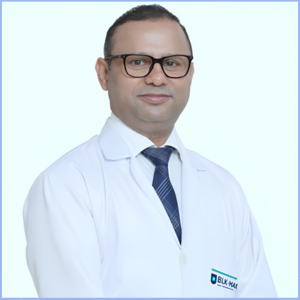
Dr. Chandragouda Dodagoudar is a highly experienced medical oncologist doctor in Delhi NCR and a trusted cancer specialist with over 25+ years of experience in oncology. He is known for providing advanced, personalized cancer treatments and compassionate patient care. With his expertise in diagnosing and managing different types of cancers, Dr. Chandragouda Dodagoudar is a trusted choice for patients seeking reliable and world-class cancer care.